




 FAQs
 Get in touch
 Refunds & Returns
 Restring Upgrades
 Shipping & Delivery

 Price match promise,
 UK based stock, staff and
What is Pickleball and how do you play it? The ultimate guide
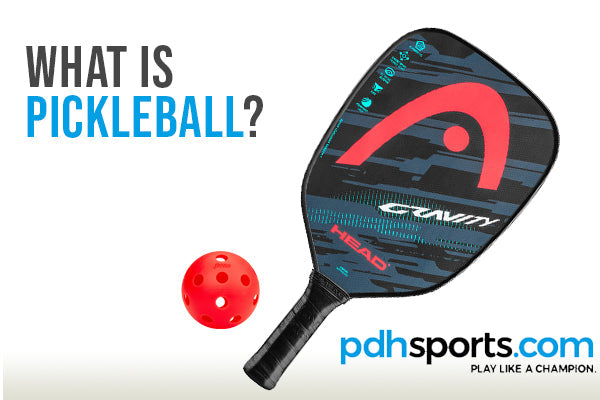
Fast paced, fun, and sociable, pickleball is the next big thing in racket sports. Arriving in the UK over a decade ago, pickleball has experienced massive growth and is continuing to increase in popularity, so much so it has even had a comedy film made about it called ‘The Dink’!
A game with similarities to badminton, tennis, and table tennis, pickleball is easy to learn, fast-paced, fitness-friendly, and enjoyable for seasoned racket sport players as well as multigenerational families and energetic kids. But where did pickleball originate, what are the rules, and where can you play it in the UK?
To answer these questions, we’ve put together an ultimate guide to pickleball, which tells you everything you need to know about the game, along with fun facts and tips from our experts on how to get the most out of playing it indoors or outdoors with your friends and family.
A brief history of pickleball: From Washington State to worldwide phenomenon
Pickleball was invented in 1965 in Washington State by congressman Joel Pritchard, two of Joel’s friends, Bill Bell and Barney McCallum, and their children. The original intention was for the friends and kids to play badminton, but when no one was able to find a shuttlecock, everyone came together to try and create an outdoor sports game with equipment they had to hand, which included:
- Table tennis bats
- Badminton nets
- A wiffle ball (a lightweight version of a baseball, but made of plastic with holes in it)
From pulling together the various pieces of equipment and putting them on the badminton court, Joel, Bill, Barney, and their kids then came up with pickleball.
For the next couple of years, pickleball was played on a badminton court until, in 1967, Joel decided to design and build the first-ever outdoor pickleball court on Bainbridge Island, Washington State. Amazingly, the court still exists on the island, but players are advised not to play on it. Instead, Founders Courts at Battle Point Park is where enthusiastic players can play pickleball at the game’s birthplace.
Then in 1972, the game began to increase in popularity. People from the Northwest began playing pickleball in other states across the country, leading to more players joining the mix and the founders deciding to officially trademark the name “pickle-ball.” This trademark led to the Pickle Ball Inc. corporation being formed and the manufacturing of official pickleball kits to commence.
Following this sudden growth and forming a corporation, 1976 saw the Southcenter Athletic Club in Tukwila, Washington State, host the inaugural pickleball tournament. David Lester won the tournament and while many of the participants were tennis players with no knowledge of the game, pickleball was all set to grow.
A fun fact – The first-ever pickleball tournament is officially recognised by the Guinness World Records!
The next two major milestones for pickleball came in 1984. First, the USA Pickleball Association, now USA Pickleball (USAP), was formed, which led to the creation of the official pickleball rulebook. The standard rules are still the same (we talk through these soon), bar minor variations.
The second milestone was that Arlen C. Paranto manufactured the first composite pickleball paddles. An industrial engineer, Arlen’s paddles drastically evolved the gameplay of pickleball and Arlen’s method is the backbone of how all future pickleball paddles would be manufactured going forward.
Over the next 25 years, pickleball continued to grow in popularity across the United States of America. It began being played in all 50 states, the USA Pickleball National Championships first took place, and in 2008, pickleball debuted at the United States Senior Olympics!
It is at this point, the early 2010s, that pickleball began making its way overseas. It landed in the UK in 2011 and since its arrival, over 20,000 players are said to be registered with Pickleball England, the official UK pickleball governing body, demonstrating how Joel Pritchard’s improvised vision has become a global phenomenon.
What is the story behind pickleball's name?
There are two stories about how pickleball got its unusual name. Some of the founders’ family members said it was named after the 'pickle boat' in rowing, which refers to a thrown together crew made up of people who aren't chosen for the main competitions or those who are available on the day. This reflects pickleball’s casual nature and its easy accessibility.
Another story claims that pickleball was named after Pickle, the Pritchards’ family dog, who chased the balls around the court while the families were playing the game. However, Pickle joined the Pritchard family after pickleball was invented, leading many (including USA Pickleball) to believe that pickleball’s name comes from the ‘pickle boat’ story.
The rules of pickleball: Easy to learn and fun for all to play!
So, how do you play pickleball? A large part of pickleball’s appeal is that it’s incredibly simple to play. Pickleball courts are the same size as a doubles game badminton court, but the courts are designed for both singles and double play.
Pickleball is played with a solid paddle and pickleball balls feature several holes and are manufactured from durable plastic. Pickleball balls are available many assorted colours, but unlike squash balls, where the various colours reflect their performance on the court, the colour of pickleball balls helps them to be seen more easily against court surfaces.
Pickleball is sometimes described as a mix of table tennis and badminton. Due to their design, pickleball balls move much slower than balls in other racket sports, helping players of all ages and abilities get to grips with pickleball very quickly. The slower-paced ball also means you can have long, satisfying rallies playing either singles or doubles.
Like other racket sports, pickleball can be played indoors or outdoors allowing people to enjoy it all year round. The only main difference between indoor and outdoor play is that indoor balls are slightly lighter than outdoor balls.
The Pickleball scoring system and tips to enhance your play
The pickleball scoring system is slightly different to other racket sports. In pickleball, you usually play up to 11 points. The winner must be ahead by at least 2. So, if the score reaches 10 all, you keep playing until someone is two points ahead. Only the serving team can score - if the receiving team win a rally, they don't score a point, but they take over as servers and can potentially win a point from the next rally.
Pickleball scores are called out using three numbers. If the score is 5-4-2, it means the serving side has 5 points, the receiving side has 4 points and the player who was second to serve on the serving team is serving. Pickleball matches are played as the best of three games - you can win 2 games to 0 or 2 games to 1.
How to serve in pickleball
Singles games
- You must serve underarm from the right-hand side of the court, without bouncing the ball, before hitting it into the service block diagonally opposite. Players then move between alternate sides.
Doubles games
- The person on the right serves first. If the serving team wins the point, the server swaps sides. If they lose the point they don't swap. Service then passes to the opponents, who also both get a turn to serve, the same way.
Rallying in pickleball
- You win a point by hitting a serve or shot that your opponent(s) cannot return to your side of the net within the court boundaries.
- During a rally, the ball can only bounce once on each side of the net, but you can often have a long rally with volleys only, without the ball bouncing.
- Shots can include smashes, lobs, groundstrokes, and volleys. There's also a non-volley zone seven feet either side of the net which is referred to as 'the kitchen'.
- The service ball must bounce in the receiving court beyond ‘the kitchen’ before it's returned, then it must also bounce in the service court before it can be returned. This is called the two-bounce rule.
- After that, the rally can continue with any combination of volleys (except in the kitchen) and groundstrokes.
All these elements help to make pickleball a great racket sport for people of mixed abilities and ages. It doesn't take long to grasp the key techniques, so you can enjoy a satisfying game at any level.
What benefits can people see from playing pickleball?
Much like padel, people can see plenty of health, social, and wellbeing benefits from playing pickleball. It’s almost become ‘the ultimate family sport’ as everyone from grandchildren to grandparents can enjoy taking part and the benefits that come from it.
Improving physical health
Unlike other racket sports, pickleball puts less strain on your body. A fifteen-minute pickleball game gives players a decent workout, without feeling daunted if they're at the start of a fitness journey.
Plus, playing in a space just one third the size of a tennis court challenges your ability to stop, turn and rebalance rapidly, without feeling overwhelmed. Also, staying out of ‘the kitchen’ requires quick reactions and deft play.
A positive social atmosphere
One of the reasons pickleball has taken off is the sociable, friendly, and entertaining nature of the game. Players can learn the basics within a few minutes and take it up confidently without much racket sport experience. That means it's easy to encourage friends and family to join you on the court.
Rallies move on fast too, so mistakes are quickly forgotten. Playing in a four on a small court creates a certain amount of physical comedy, with pickleball players dodging each other and calling out instructions to try and share the shots to best advantage.
Increasing self-esteem
The newness of pickleball is a benefit when it comes to self-esteem. If an adult is already a good racket sport player, it can put youngsters off from joining in. But if it's the first time for everyone, trying a game of pickleball is less intimidating.
Kids usually get the hang of pickleball quickly, which builds their self-confidence and encourages them to keep playing. Plus, the accessibility of pickleball means it's easy to involve older family members who might be putting off joining in with more aggressive or intense sports.
How do I find a place to play pickleball in the UK?
There are now hundreds of venues in the UK where people can play pickleball, and number is growing all the time. Leisure centres, racket sport centres (including some David Lloyd clubs), and sports halls are all getting in on the pickleball act. You can find places and clubs where you can play pickleball on:
You can also give pickleball a go on a tennis court or a badminton court if you can lower the net. Plus, one of the remarkable things about the game of pickleball is that you don't need a special court or club membership to take part.
If you have a flat space in your garden, driveway, a recreation area, or indoor sports hall, you can mark out a temporary pickleball court with chalk or tape and set up a portable net!
Are you and your family ready to give pickleball a go?
Over 60 years since it was created by chance in Washington State, USA, pickleball has taken the globe by storm. Easy to pick up and play, pickleball is fun for everyone and ideal for players of all abilities. And celebrities have been playing pickleball in droves too!
From the likes of Kim Kardashian, Emma Watson, Brene Brown and George Clooney to elite athletes including Serena Williams and Lebron James, everybody has been giving pickleball a go, showing how this unique racket sport attracts the stars and appeals to the masses.
If we’ve convinced you to give pickleball a go, or you’re already a seasoned player, we stock all the latest pickleball paddles, balls, bags, clothing, and shoes you need to play the game safely, from leading brands including Gamma, HEAD, and Joola.
Plus, you can learn more about pickleball by reading our detailed guides, written by our racket sports experts, or contacting the PDH Sports team, who can answer any questions you may have before heading to the pickleball court.