




 FAQs
FAQs Get in touch
 Refunds & Returns
 Restring Upgrades
 Shipping & Delivery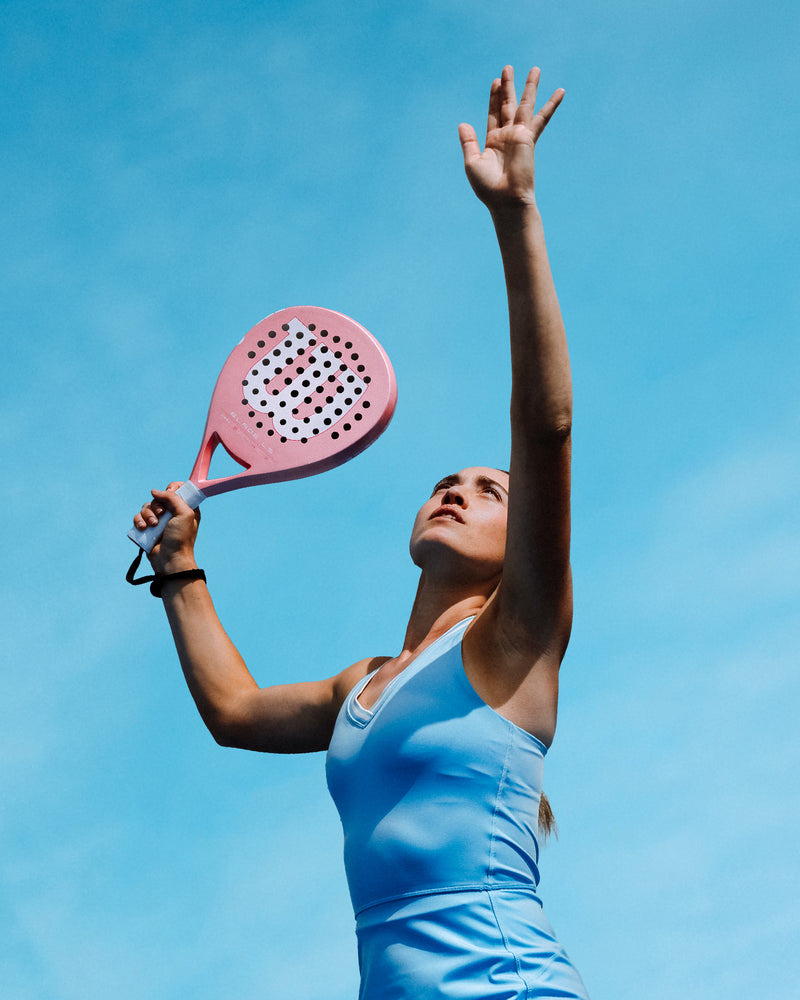

 Price match promise,
  UK based stock, staff and
 What is padel and how do you play it? The ultimate guide

Looking for a new racket sport to get into? One that’s fun, social, and a great workout? We highly recommend padel! Since 2019, padel has exploded in popularity to become the fastest-rising sport in the world.
Blending elements of tennis and squash, padel is a fast-paced and addictive game, with an emphasis on inclusivity, collaboration, and socialising. But what is padel’s origin story, how do you play it and, most importantly, where can you play it?
Our ultimate guide to padel provides answers to all those questions, as well as tips on how to get the most out of the game in the UK. So, get ready to find out more by digging into our ultimate guide to padel!
The origins and history of padel: A story of innovation
Padel's history is a fascinating mix of innovation and lucky coincidences. Padel’s origins can be traced back to a British cruise ship in the 1910s. Because of the constrained deck space, passengers played a simplified form of tennis with smaller, solid paddles. But the “official” birth of modern padel occurred in Mexico in the 1960s, thanks to Enrique Corcuera.
Enrique wanted a tennis court for his home but didn't have enough space outside. To solve this problem, he created a smaller court with four-metre-high walls on all sides, to prevent losing balls in his neighbour's gardens. By creating this innovative court, Enrique had inadvertently created a new game which he called ‘Paddle Corcuera.’
Then in 1974, Corcuera's friend, Spanish prince Alfonso de Hohenlohe, played a game of Paddle Corcuera and fell in love with it. Hohenlohe became a driving force in exporting Paddle Corcuera from Mexico by building the first two padel courts in Spain at the Marbella Club on the Costa del Sol, where the courts still exist today!
The accessible nature of Paddle Corcuera and its sociable approach made it a huge hit in Spain. Soon, the Spanish population took notice and adopted the sport, and Spain is now consideredthe global headquarters of padel. With over 17,300 courts (as noted in our Grassroots Gap report) and more than six million players, padel is now the second most popular sport in the country after football.

Then a year later, in 1975, an Argentine millionaire, Julio Menditenguia, discovered Paddle Corcuera in Marbella and took it back to Argentina, where it also became massively popular. Paddle Corcuera’s rapid expansion around the world led to the formation of the International Padel Federation (FIP) in 1991, and in 1992, players formed the British Paddle Association keen to compete at the World Paddle Championships.
The following year, 1993, saw the Spanish Sports Council officially change the name of the sport from 'Paddle' (shortened from Paddle Corcuera) to 'Padel'. The change in name was intended to reflect the Spanish pronunciation, with the emphasis on the first syllable - 'pah-del' - although in English-speaking countries, we still tend to pronounce it 'paddle.'
And in 2019, the Lawn Tennis Association (LTA) announced it was integrating British Padel into its organisation, with popularity and player numbers now at an all-time high, with no signs of slowing down.
The rules of padel: Simple to start, tough to master but addictive to play!
How do you actually play padel? Padel is played on a court that is 25% smaller than a tennis court, with four-metre-high glass and wire-mesh walls on every side.A few courts are designed for singles play, but the vast majority of padel courts around the world are designed for doubles games.
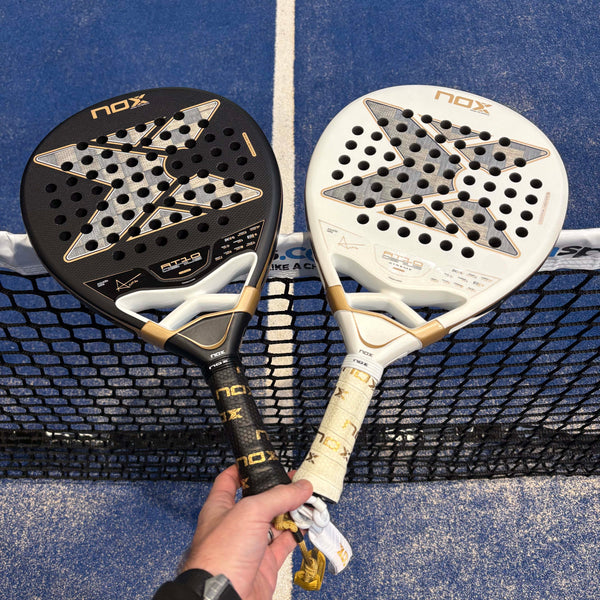
You play padel with solid, stringless rackets with holes in them and hit a lower-pressure ball that looks remarkably similar to a tennis ball but does not bounce as high, over the net to the other side of the court. The balls can bounce off the walls, as well as the court surface, like what you see with the enclosed nature of squash or racketball.
Padel also involves less running and relies more on strategic positioning and teamwork within the smaller, enclosed court. Playing off the walls creates longer rallies and a more cooperative game than other racket sports. You don't need years of practice to play a good game, which is a major reason behind its overall appeal.

The padel scoring system and tips to enhance play
The scoring system in padel is the same as in tennis:0, 15, 30, 40, game. A set is won when a team wins six games with a two-game difference. Matches are usually best of three sets.
- Serving: The serve must be underarm, which is easier to execute than overarm tennis serves. The server must bounce the ball on the ground first before hitting it below or at waist height. This means games are not dominated by big servers and first returns. Padel rallies are usually longer, and the game is more enjoyable and accessible for newer players. And, like tennis, you have a first and a second serve.
- Rallying: Once the ball is in play, it can be hit off the walls. But the ball must always hit the ground on your side of the court before hitting a wall. You can then let it bounce off the wall once more before returning it over the net. This extra dimension of play is what makes padel so strategic and exciting, encouraging long rallies and impressive shot-making.
So why is everyone now playing padel?
Padel's popularity has soared far beyond its initial homes of Spain and Argentina and is now booming in countries including Italy, France, and the USA. Padel has seen explosive growth in the UK because it combines several fabulously addictive characteristics (and we should know - we're totally hooked!):
- Sociability and community: Padel is a four-person game, so it's a fantastic way to socialise, meet new players and spend time with friends or family. The social nature of padel has fostered a powerful sense of community, with players often gathering in clubs for a coffee or drink after a match. It is a sport designed for a connected generation of players.
- Accessible: The underarm serve and smaller court make it easy for players of all ages and abilities to pick up the game and have a fun rally from the very first session.
- Fitness: Padel is a good cardio workout without the intense physical demands of sports like tennis, which covers more distance.
How to find a local padel club in the UK
Padel has come of age in the digital era, which is another reason it has grown in popularity and accessibility. You can find a court and game through apps like:
All these apps allow you to enter your location and find courts and clubs near you. It is worth noting that some local clubs or centres may have their own booking systems, and the apps also help you locate other racket sport clubs nearby, not just padel clubs. Check out The Padel Directory for a comprehensive list of UK padel courts.
When you’ve found a club, you can book a court for 60 or 90 minutes. You can either book an entire court and invite your friends, or you can join an 'open game' where you can book a single spot. Don’t worry if a game is listed as 'competitive' - you can often change it to 'casual' or 'friendly.'
A wonderful way for beginners to get started is by joining group mix-in sessions, known as 'americanos' or 'americano tournaments'. These are often longer sessions that allow you to play with a variety of people and socialise afterwards.
How do I find out my padel level and player rating?
Most of the apps use a rating system. When you first sign up, you'll be asked for a rough estimate of your level. The more you play, the more stable and accurate your rating becomes.
- LTA ratings: The LTA has a rating system from 1 to 6. Grades 1 and 2 are for the top UK players, while grades 3, 4, and 5 are for amateur players working on their skills and entering tournaments.
- Playtomic ratings: Playtomic uses a more detailed level scale. A rating of less than 1 is for those with no experience, while a rating between 1 and 1.49 is for beginners. The scale goes up to 5.4, which is considered a competition-level rating. It's often a good idea to join a game with people at a similar rating, though you can challenge yourself by playing with people who have a slightly higher rating.
An effective way to get an accurate rating is to book a levelling session with a coach at a Playtomic-registered club. These sessions will give you a professional assessment of your level, so you can join games with confidence.
The professional padel scene: A new era
The World Padel Tour (WPT) was the main professional circuit for years, but in 2022, a new tour, Premier Padel, was launched, backed by the International Padel Federation (FIP) and Qatar Sports Investments. These two tours merged to create a unified and even more global professional circuit.
Premier Padel made an exciting debut in London between the 2nd and 9th of August at the Olympia in London. Several highly competitive games took place and top players from around the world flocked to the capital. The inaugural London P1 Male Champions are Agustin Tapia and Arturo Coello, and the first London P1 Female Champions are Claudia Fernandez and Martina Calvo.
In terms of the wider professional scene, Spanish and Argentinian players dominate the Top 100 FIP rankings. Male players like Alejandro Galán and Juan Lebrón, along with female stars such as Ariana Sánchez and Paula Josemaría, have become household names among fans, displaying the highest level of skill, athleticism, and strategic play.
Britain isn’t left out, though. Christian Medina Murphy and Louie Harris are growing their reputations on the global scene, while Aimee Gibson and Catherine Rose (Catherine currently appears in the Top 100 FIP rankings) are building momentum in international women’s tournaments. This demonstrates that the future of professional padel is very bright in the UK.
Are you ready to play padel?
In our humble opinion, padel is more than just a sport. It's a social activity, a community, and a fantastic way to stay active. The simple rules and engaging gameplay make it accessible to everyone, from complete beginners to seasoned athletes.
Whether you’re looking for a new pastime, a fun way to exercise, or a way to burn off your competitive streak, you’ll find it all on the padel court. Find a local club or venue using one of the apps and discover why everyone - from David Beckham and Serena Williams to Eva Longoria and Lando Norris - is playing this incredible sport.
And naturally, when you need to get kitted out for your new hobby (or obsession!) we have all the padel rackets, balls, bags, accessories and shoes you'll need as you progress from leading brands including Adidas, Babolat, and Bullpadel.
Also, take our padel racket quiz to find out which padel racket, from our extensive and growing collection, suits your style and level of play. Plus, book a some time in at our demo court, so you can try out padel rackets before you buy them.