


 FAQs
FAQs Get in touch
 Refunds & Returns
 Restring Upgrades
 Shipping & Delivery
 Price match promise,
  UK based stock, staff and
 How to choose padel balls: everything you need to know
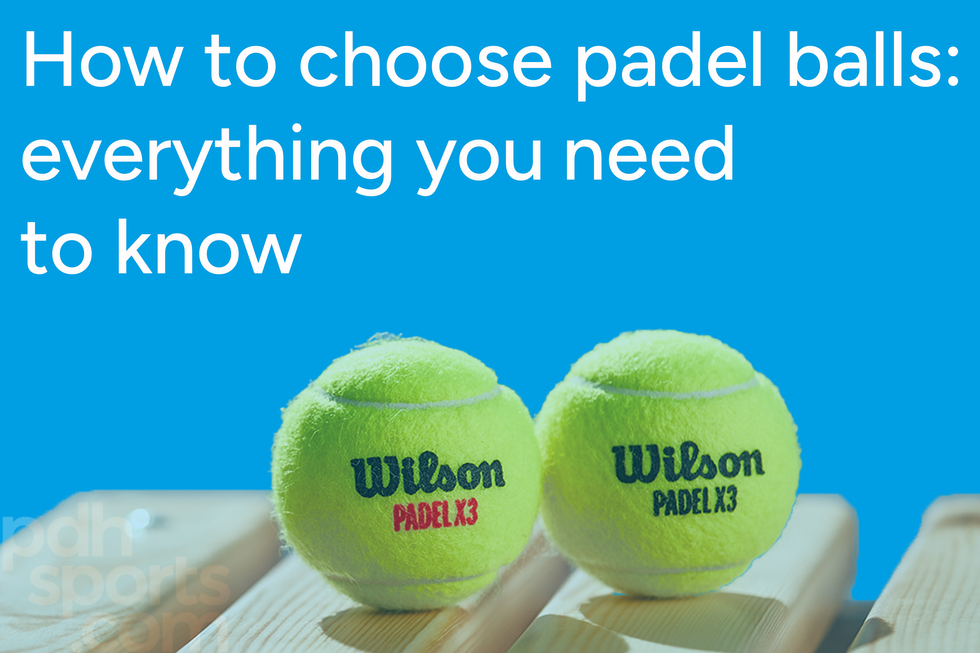
You might think there's not much to say about padel balls... but you'd be surprised! Call us padel nerds (it's okay, we're proud of it!) but we've researched everything you need to know about the history, design, construction and refinements of padel balls.
As well as technical and performance information, read on for some personal recommendations on the best padel balls in different situations, courtesy of our pdhsports.com padel expert Pete.
The difference between padel balls and tennis balls
At first glance, a padel ball and a tennis ball look pretty similar, and you might be tempted to make do with tennis balls for your padel game. However, a padel ball is specifically designed for the sport's unique demands.
Pressure: Padel balls have a lower internal pressure than tennis balls. This results in a slower ball speed and a lower bounce, which is crucial for the enclosed court and wall play characteristic of padel.
Size: While very similar, padel balls are typically slightly smaller than tennis balls. This minor difference impacts aerodynamics and playability within the smaller padel court.
Felt: The felt on a padel ball is often denser and more durable, designed to withstand the frequent impacts with the glass walls and mesh fence.
If you used a tennis ball in padel, it would fundamentally change the game. You'd find it much faster and harder to control the ball, so you'd lose out on those long and strategic rallies that make padel so much fun. You might as well go and play tennis!

What makes a good padel ball?
Several characteristics add up to a padel ball's ultimate quality and how it performs on the court:
Bounce: Good padel balls provide a consistent and predictable bounce, allowing for accurate shot placement and fluid rallies. The bounce should not be too high or too low, but just right for the game's rhythm.
Consistency: Every ball in a can should perform similarly. Inconsistent padel balls can lead to unpredictable play and frustration.
Durability: Given the intensity of padel and the constant interaction with walls, quality padel balls should be robust and maintain pressure and felt integrity for several matches.
Speed: While generally slower than tennis balls, there are variations in padel ball speed. Some are designed for a slightly faster game, others for a slower, more controlled pace.

How to choose the right padel ball for you
The right padel ball for your level, court and wallet will improve your overall playing experience. Here's what you need to think about:
Court: Padel balls aren't marketed specifically for indoor or outdoor use - any padel ball is fine for either. But outdoor courts are affected by wind and air temperature, which might influence you to go for a more resilient ball.
Conditions: High altitude, humidity, and temperature can all affect how a padel ball performs. In hotter conditions, balls tend to bounce higher, so a lower-pressure ball might be preferred.
Player level: Beginners might prefer a slower padel ball for better control. For advanced players, a faster ball can increase game intensity.
Price: Some padel balls cost more than others. While you should choose balls that suit your budget, remember that investing a little more often means better durability and performance.
Quantity: Padel balls are sold in packs of 3 or 12. As with any multipack, buying a larger quantity means a lower price per ball.

FIP approved and official World Tour padel balls
For a padel ball to be used in high-level competitions, it must have FIP (International Padel Federation) approval, certifying quality and adherence to strict regulations on weight, diameter, and bounce. This ensures fair and consistent play across all professional tournaments.
On the professional circuit, the official ball for the Premier Padel tour is the Wilson Premier Padel ball, specifically designed to handle varied playing conditions. The FIP tour uses several approved brands, making a selection for each match based on the court and conditions.
Official balls are meticulously engineered to meet the demanding standards of the world's best players, often with subtle variations to suit different climates and court speeds.
Tips from the front of court: pdh padel expert Pete's recommendations
"Choosing the right ball boils down to balancing speed and durability," says Pete. "And consider the playing environment: the conditions will affect the ball's pace. If you're playing outdoors in the UK, a faster ball might be beneficial, to counteract the slowing effect of cooler temperatures or dampness, which can significantly impact bounce and feel. Conversely, if you're indoors on a warm day and finding balls are flying out easily, switching to a slower ball will help increase control and overall game quality.
"For reliable, all-around choice, our most popular balls are the Babolat Court and HEAD Pro +. If your focus is primarily on outdoor play, the Adidas RX is a standout choice. For players seeking a noticeable boost in speed, consider the Pallap Competition and HEAD Pro S+.
"If value is your priority, but you don't want to sacrifice performance, the Dunlop Pro, Tecnifibre Team, and Nox Pro Titanium are great options. If you want the ultimate performance and feel, premium choices are the Wilson Premier Padel and Bullpadel Premium Pro."
There's also a more sustainable option: the Dunlop Eco comes in fully recyclable, plastic-free packaging.
A couple more padel ball facts!
Just in case our recommendations and insights so far aren't enough, here's some bonus padel ball info!
Pressure loss: Even when not in use, padel balls gradually lose pressure over time. That's why they are sold in pressurised cans - so they maintain their optimal playing characteristics until opened.
Manufacturing process: A padel ball is a sophisticated piece of engineering. The rubber core is covered with two halves of felt: they must be meticulously glued and pressed together to ensure a perfect spherical shape.
Ready to buy padel balls? We're here to help!
Whatever your padel ball preferences, we have the perfect pack for you. Take a look at the full range now. Or if you need more advice, drop us a line!